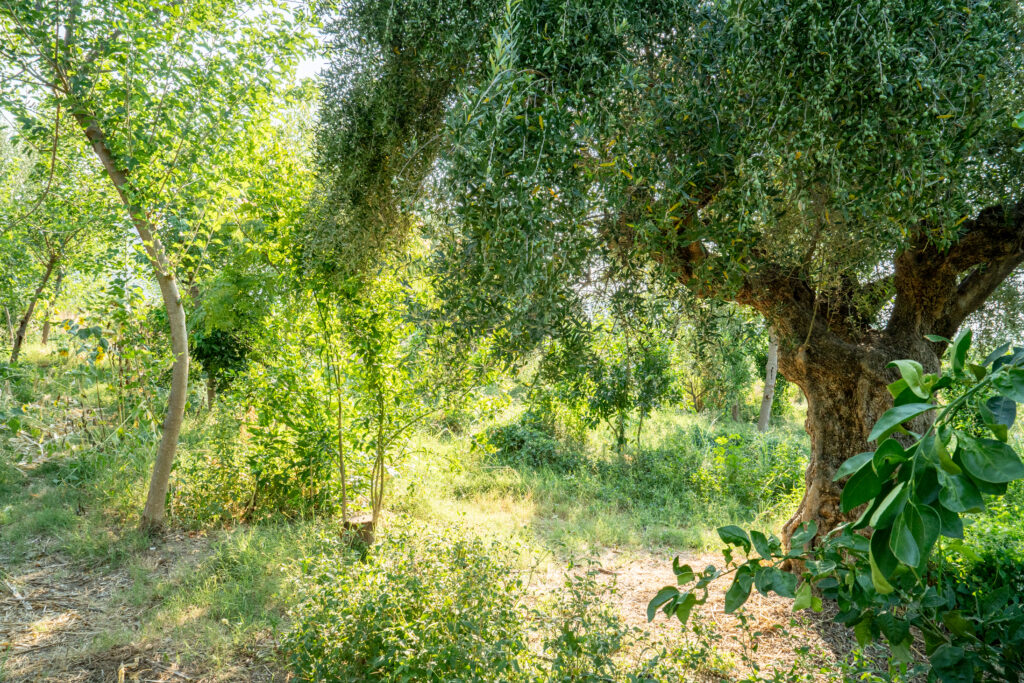
Land size: 2 ha
Annual Rainfall: 900mm
Soil: Clay
Existing cultivation: Olives and Citrus cultivation (organic since 1985)
LOCATION
Skala, Greece
DATE OF CONVERSION
April 2015
The Farm - The People
- The Area
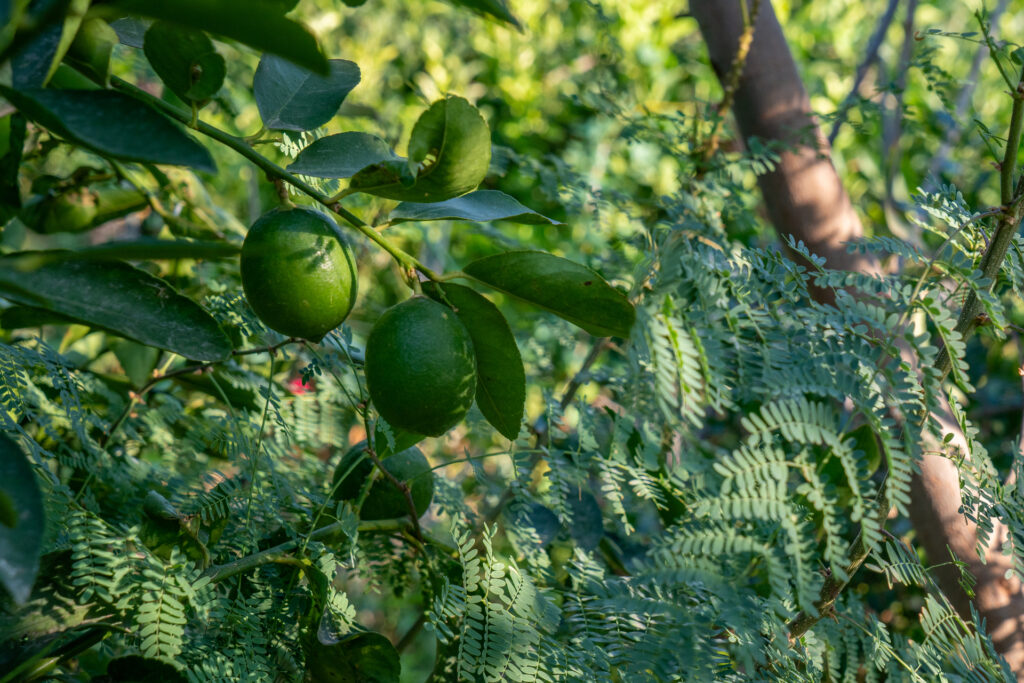
This farm has been organic since 1985, with hundreds of years-old olive trees amidst the citrus trees that were cultivated by the grandparents of the owner. Situated in a fertile valley, it is surrounded by extensive monocultures of citrus plantations, managed in a conventional way. It is possible to observe big differences in the overall farm resilience, soil health, and pest management with the conventional farming operations around.
Currently, the farm is a demonstration site for agroforestry practices managed by The Southern Lights team and open to visitors, as a living example of the outcomes possible to achieve through agroforestry and regeneration. It has been an experimentation site for the implementation of regenerative practices since 2015, and it now acts as an active hub for research collaborations, as well as a learning center through various activities.
Key concept
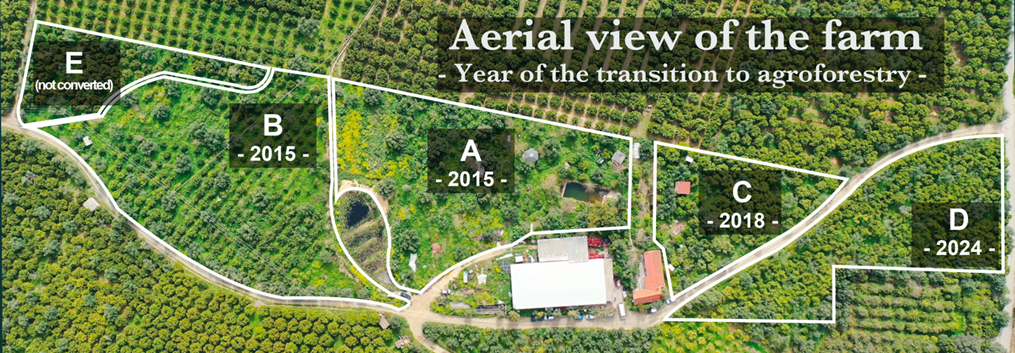
In 2015 the transition to agroforestry happened first unintentionally, through the grafting of all the citrus trees and the sudden high exposure of the ground to sunlight. Soon after, due to the freeing up of space in the farm, the third generation owners planted a diverse and dense experimental food forest among the citrus and olive trees, experimenting with a high diversity of plants, ranging even to subtropical species. In the meantime, olives are still harvested the same way as before, while the high diversification and the resulting market approach through the owner’s family business in organics (Silver Leaf) is particularly interesting.
The transition in Detail
BEFORE THE CONVERSION
Organic monoculture of orange trees intercropped with century-old olive trees.
AFTER THE CONVERSION
The farm has progressively transition across various parcels into a complex and dense agroforestry system.
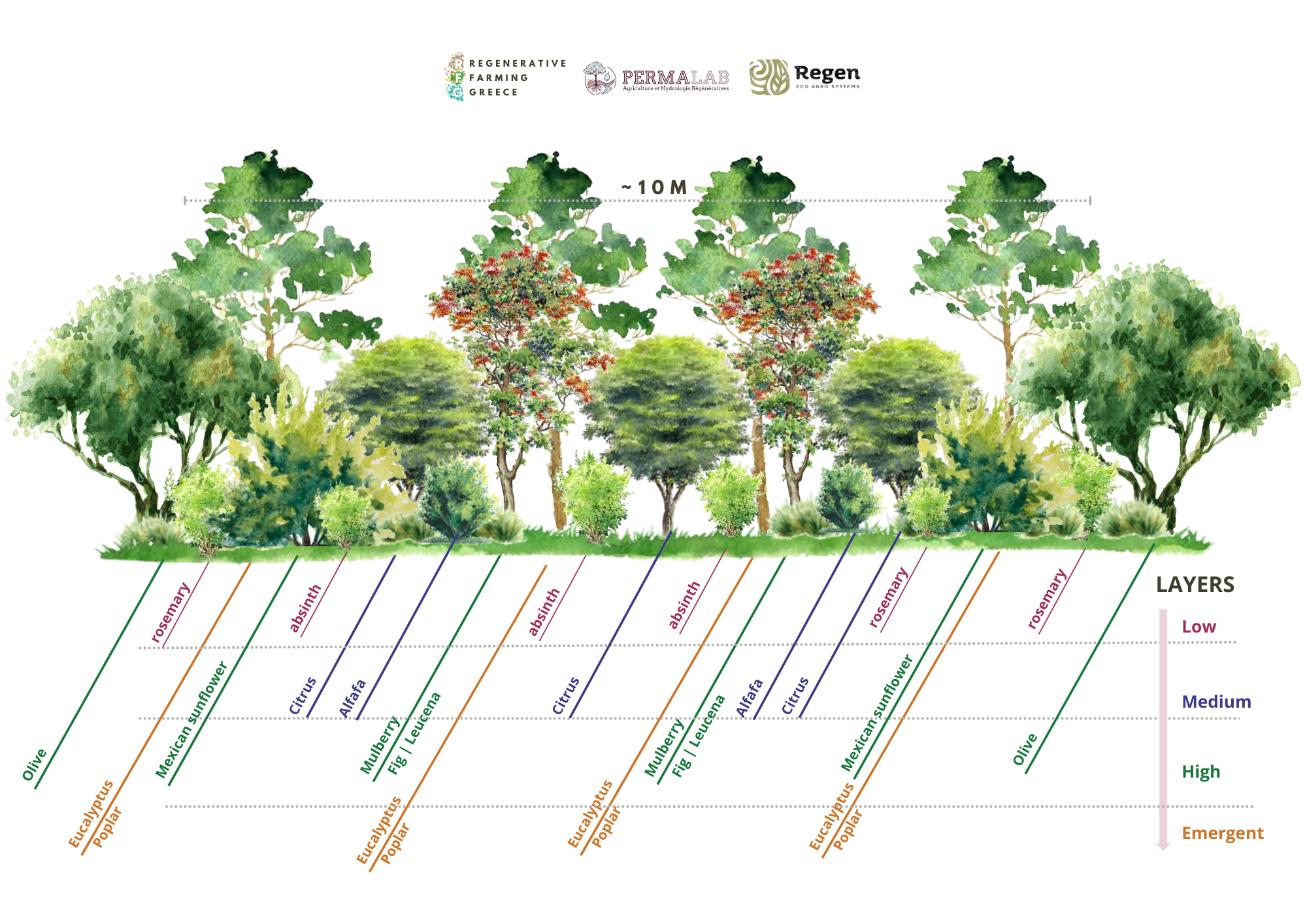
PLOT "A" TREE LINES
For crop
Various citrus trees
Olive tree
Secondary fruits: loquat, pomegranate, pear, mulberry, kaki and fig
Rosemary
Absinth
For Timber
Eucalyptus
For organic matter production
Mulberry
Leucena
Eucalyptus
Poplar
Fig
Mexican sunflower
Boldo
Alfafa
Cotton
Side view of the olive tree lines
Trees and shrubs of different layers are added to each existing tree line.
Address: Skala, Laconia, Greece - 3 South of Athens
We use cookies to ensure that we give you the best experience on our website. If you continue to use this site we will assume that you are happy with it.